Development is a competitive advantage
As skills demands accelerate and productivity pressure grows, development has become a critical driver of business performance. Organisations that fail to grow capability fast enough will struggle to adapt, innovate, and retain talent.
Great Place To Work research shows that development depends on one essential condition: trust. In high‑trust cultures, people are far more likely to learn, stretch, and invest in their own growth. Where trust is low, development becomes inconsistent, transactional, or deprioritised altogether.
This is the Great Place To Work Effect in action. When trust enables development, organisations become more agile, more innovative, and more resilient — turning growth into a sustained competitive advantage.
Development delivers measurable performance outcomes
New Great Place To Work research reveals how employee development drives business success by boosting performance outcomes like retention, innovation and productivity.
2X higher productivity
Employees in high-development* environments are 2X more likely to agree that people at their organisation "look for faster and smarter ways to deliver high-quality work."
2.5X higher innovation
Employees in high-development environments are 2.5X more likely to say they have "meaningful opportunities to innovate."
2X higher intention to stay
Employees with access to development opportunities are 2X more likely to say they "want to stay at their organisation a long time."
*high-development = workplaces who excel against Great Place To Work's Development Index; which includes 10 statements from the core Trust Index™ survey that our research has found to have the most impact on employees’ experiences of development.
The leading UK sectors for wellbeing in the workplace
We collected data from employees across key UK sectors and evaluated them using our Extended Wellbeing Index. This Index measures holistic workplace wellbeing across areas such as Interpersonal Relationships, Job Design & Fulfilment, Work-Life Balance, Psychological Safety, Mental, Physical & Financial Health, and General Evaluation of Wellbeing. Each sector received a Extended Wellbeing Index score and was ranked from highest to lowest based on their overall wellbeing experiences.
Development under pressure in the UK
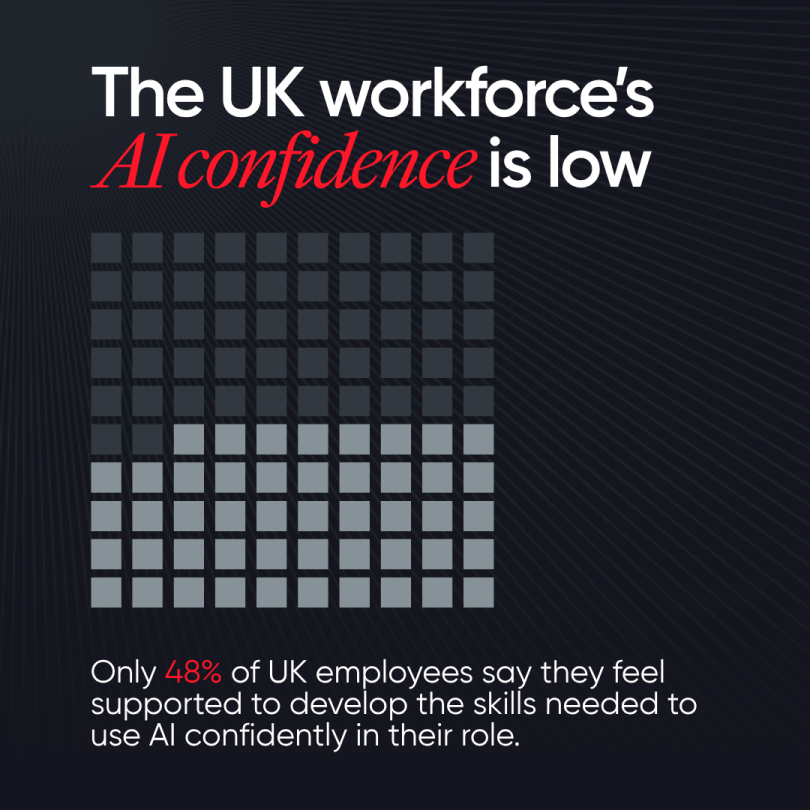
Trust enables development
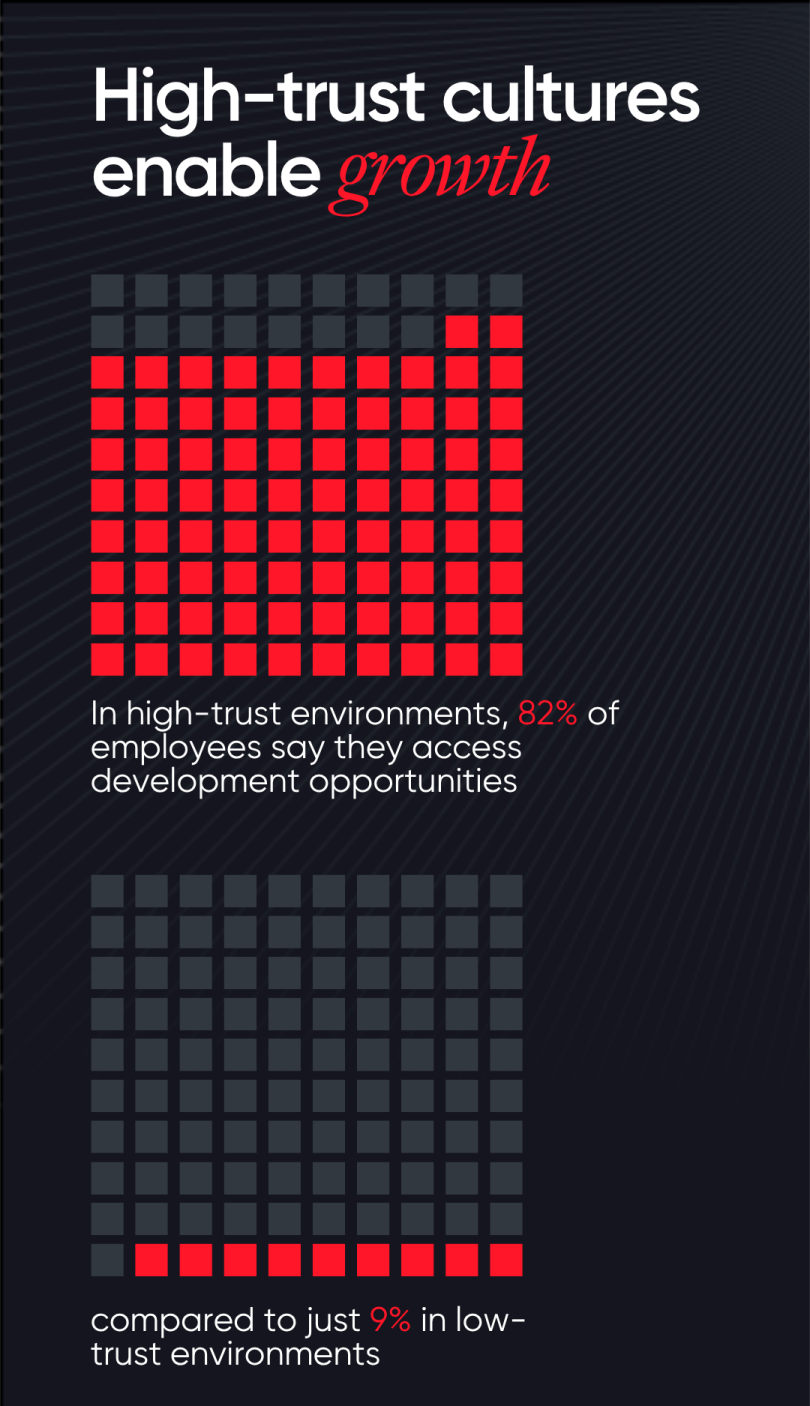
Meaningful development doesn’t happen in isolation — it is enabled by trust.
When trust is high, employees are far more willing to stretch and take ownership of their growth. They feel safe to experiment because mistakes are treated as learning, and development is clearly connected to the future of the business. As a result, development becomes ongoing and practical — embedded in everyday work rather than confined to formal programmes or annual reviews.
This is why trust is the critical enabler for development at scale. In high‑trust workplaces, employees are dramatically more likely to access development opportunities and apply what they learn to their work. By building transferable skills, encouraging experimentation and increasing confidence, high-trust, high-development organisations create the breeding ground for innovation, agility and productivity.
This pattern sits at the heart of the Great Place To Work Effect: trust enables development, development builds capability, and capability drives performance.
Development enabled by trust is not just a cultural advantage, but a key enabler for organisational performance.
"I have been impressed with the level of support, development and opportunities. I see my role within the organisation as long term where I can progress, grow and develop. "
Employee at Northumbrian Water Group, No. 19 UK's Best Workplace for Development (Super Large)
Trust is the precondition for transformation
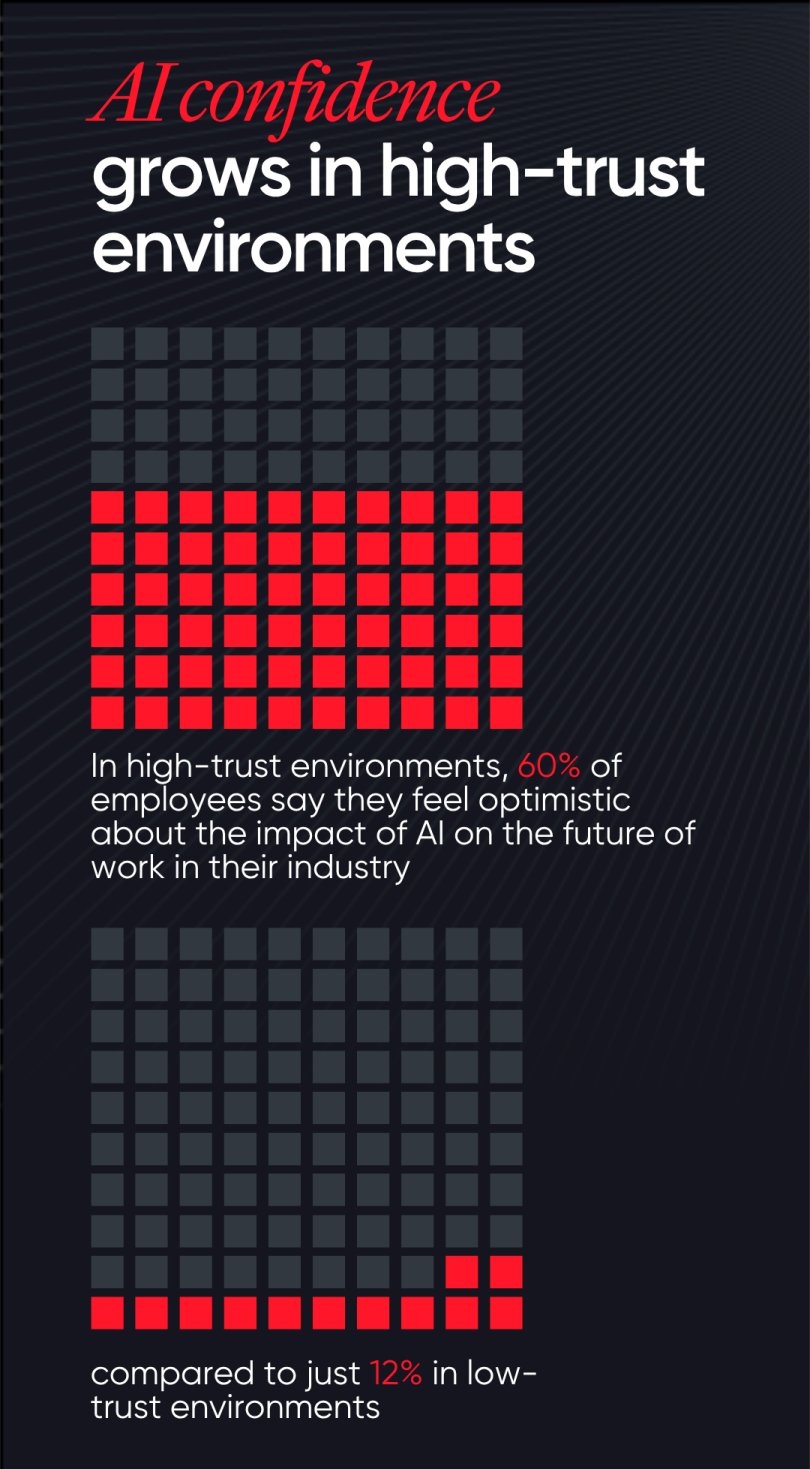
Change creates new demands on people, whether driven by AI, new systems, or shifting business priorities. In every case, success depends not just on what is changing, but on how supported people feel as they adapt: leaders must focus as much on confidence and trust as on tools and processes.
In high‑trust environments, employees engage with change. They build new skills, ask questions, and develop confidence as their roles evolve. Employees with better access to development opportunities are 2X more likely to agree that people at their organisation "quickly adapt to the changes needed for success." This supports AI fluency where technology is already in use, and readiness where it is not.
In high‑trust cultures, this is how the Great Place To Work Effect shows up in practice – enabling organisations to absorb change and convert it into performance.
Trust creates the conditions for employees to keep pace with change: it is the prerequisite for successful transformation.
“What makes this company special is the genuine sense of trust and ownership everyone’s given. Ideas are listened to, creativity is encouraged, and good work is recognised. ”
Employee at ByAtlas, No. 8 UK's Best Workplace for Development (Small)

Development is a two-way street
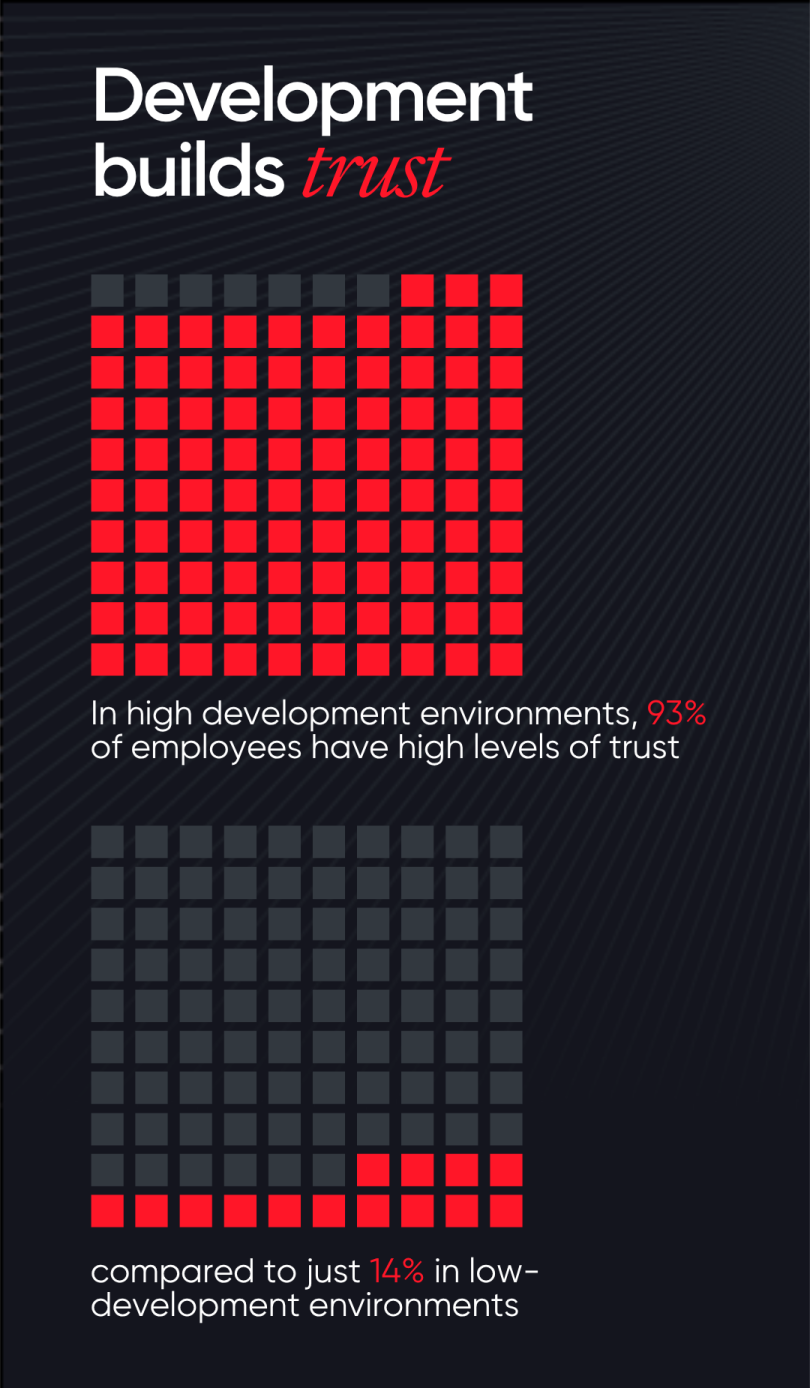
Development isn’t just more likely to happen in a high-trust environment, it’s also a vital factor in building trust.
There are nine key leadership behaviours identified in The Great Place To Work Effect: when leaders practice these consistently, it builds trust, which shapes the culture that drives performance. Developing is one of these behaviours.
Development is enabled when leaders consistently demonstrate trust‑building behaviours that create the conditions for learning and growth. This looks like:
-
Development as a daily behaviour: high‑trust leaders treat development as a daily leadership behaviour - embedded in coaching, empowerment, and recognition, not confined to formal programmes.
- Fostering empowerment: when employees have meaningful ownership over their work, they build confidence and capability. High-trust leaders encourage autonomy whilst still offering support.
- Recognising effort and learning: consistent recognition of effort and learning is a trust‑building behaviour that reinforces development through encouragement, feedback, and appreciation.
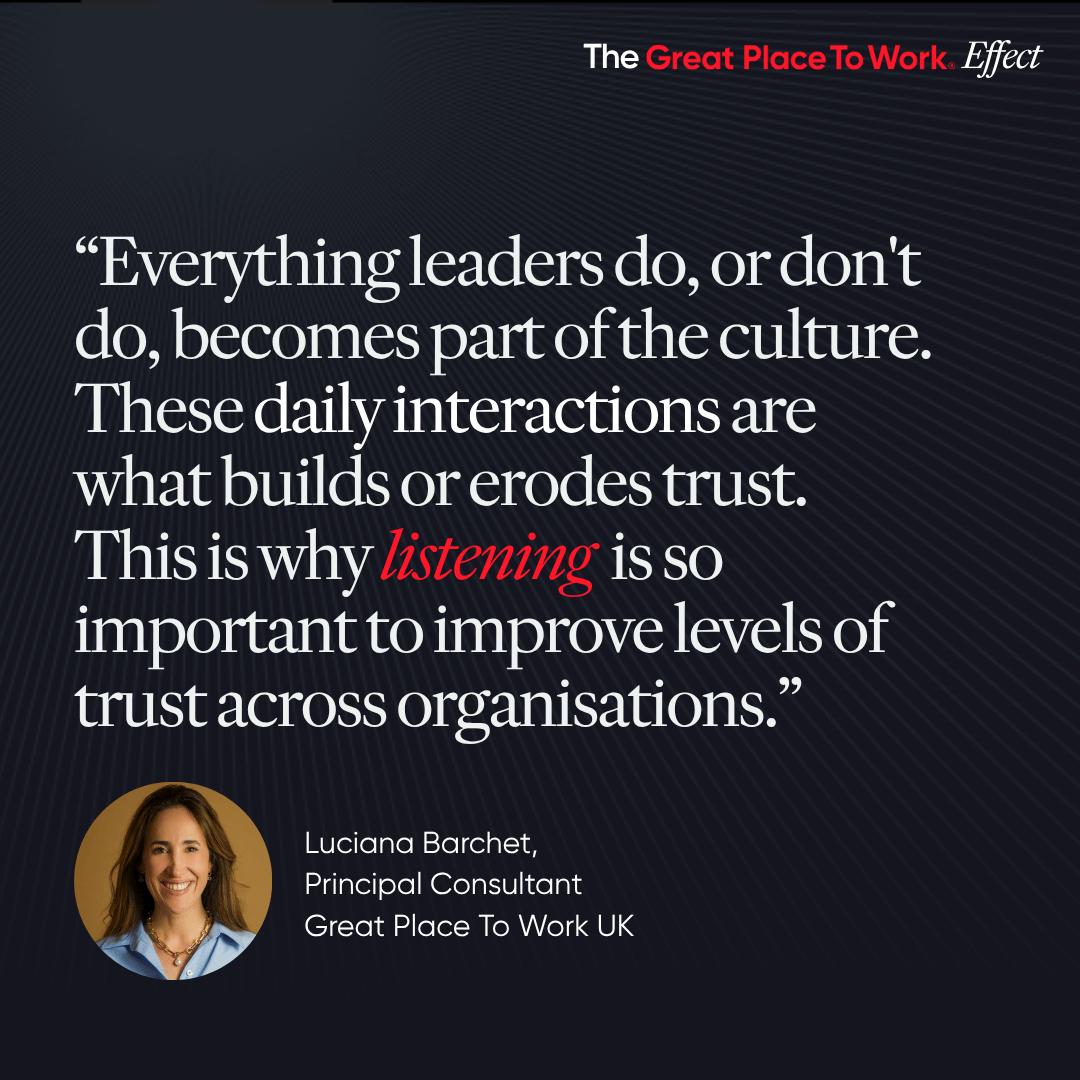
- Listening: another core leadership behaviour, listening is vital to development, enabling leaders to understand employees' strengths and aspirations and tailor growth opportunities to support both individual and organisational goals.
- Fair access to opportunities: high‑trust leaders ensure development is available to all by distributing learning, stretch roles, and progression based on strengths and capability.
The bottom line
Development is not just shaping better workplaces — it is delivering measurable business advantage. Organisations on the UK’s Best Workplaces Lists, where trust and development are embedded into everyday leadership, outperform the market by more than four times and achieve 6.25x greater revenue per employee.
These results are not driven by isolated initiatives, but by cultures where trust enables development at scale. For leaders focused on growth, competitiveness, and long‑term value, the message is clear: when people grow, performance follows.
Download your copy of The Great Place To Work Effect to discover how leaders can build trust, shape culture and drive performance.
.png?width=400&height=400&name=Employees%20with%20life%20admin%20support%20are%203x%20more%20likely%20to%20report%20good%20work%E2%80%93life%20balance.%20(17).png)
High‑trust workplaces are more agile and better at adapting to change.
Why? Because development:
•Builds transferable skills •Enables internal mobility •Encourages learning in response to change rather than resistance •Employees who are used to learning and stretching can move with the work instead of clinging to static roles.
Employees with better access to development opportunities are over twice as likely to report market resilience and agility.
.png?width=400&height=400&name=Employees%20with%20life%20admin%20support%20are%203x%20more%20likely%20to%20report%20good%20work%E2%80%93life%20balance.%20(17).png)
GPTW research shows that employees in high‑trust cultures are far more likely to:
•Go above and beyond •Experiment and improve processes •Contribute ideas rather than hold them back
Development reinforces this by:
•Increasing confidence •Signalling permission to learn by doing •Normalising experimentation and skill‑building
Employees in high‑development environments are 2.5x more likely to innovate, and when it comes to increased access to development opportunities are 2x more likely to be willing to give extra effort.
2X higher agility
High‑trust workplaces are more agile and better at adapting to change.
Why? Because development:
•Builds transferable skills •Enables internal mobility •Encourages learning in response to change rather than resistance •Employees who are used to learning and stretching can move with the work instead of clinging to static roles.
Employees with better access to development opportunities are over twice as likely to report market resilience and agility.
2X higher innovation
GPTW research shows that employees in high‑trust cultures are far more likely to:
•Go above and beyond •Experiment and improve processes •Contribute ideas rather than hold them back
Development reinforces this by:
•Increasing confidence •Signalling permission to learn by doing •Normalising experimentation and skill‑building
Employees in high‑development environments are 2.5x more likely to innovate, and when it comes to increased access to development opportunities are 2x more likely to be willing to give extra effort.

2X higher agility
High‑trust workplaces are more agile and better at adapting to change.
Why? Because development:
•Builds transferable skills •Enables internal mobility •Encourages learning in response to change rather than resistance •Employees who are used to learning and stretching can move with the work instead of clinging to static roles.
Employees with better access to development opportunities are over twice as likely to report market resilience and agility.
2.5X higher innovation
GPTW research shows that employees in high‑trust cultures are far more likely to:
•Go above and beyond •Experiment and improve processes •Contribute ideas rather than hold them back
Development reinforces this by:
•Increasing confidence •Signalling permission to learn by doing •Normalising experimentation and skill‑building
Employees in high‑development environments are 2.5x more likely to innovate, and when it comes to increased access to development opportunities are 2x more likely to be willing to give extra effort.
2X higher agility
High‑trust workplaces are more agile and better at adapting to change.
Why? Because development:
•Builds transferable skills •Enables internal mobility •Encourages learning in response to change rather than resistance •Employees who are used to learning and stretching can move with the work instead of clinging to static roles.
Employees with better access to development opportunities are over twice as likely to report market resilience and agility.
2.5X higher innovation
GPTW research shows that employees in high‑trust cultures are far more likely to:
•Go above and beyond •Experiment and improve processes •Contribute ideas rather than hold them back
Development reinforces this by:
•Increasing confidence •Signalling permission to learn by doing •Normalising experimentation and skill‑building
Employees in high‑development environments are 2.5x more likely to innovate, and when it comes to increased access to development opportunities are 2x more likely to be willing to give extra effort.
The Great Place To Work Effect
How trust fuels growth by shaping the culture that drives performance.
.png)
Sources:
1. CIPD, Devolution and evolution in UK skills policy, 2023
2. CIPD, Lifelong learning in the reskilling era, 2025
3. Government Office for Science, Skills and lifelong learning: cost of skills underutilisation, 2017
Great Place To Work UK Workforce Study 2026