

The trust advantage
How trust fuels growth across sectors

Across sectors, trust is your sharpest competitive edge
Trust isn't just a cultural outcome. Across disparate industries with their own distinct challenges, it is the common thread running through successful organisations like the UK's Best Workplaces™ by Sector.
Each has built a high-trust environment where people are genuinely equipped – and motivated – to do their best work, consistently and over the long term. This is what we call The Great Place To Work Effect: great leaders build trust, trust shapes culture, and culture drives performance.
In this report, we uncover how a high-trust culture helps organisations tackle the biggest causes of performance drag in their sector, unlock the power of their people, and fuel commercial results.
In financial services & insurance, trust drives AI readiness
The financial services and insurance sector is rapidly adopting AI in underwriting, claims, credit, fraud, and customer service. But UK employees are increasingly feeling left behind, with only 38% feeling optimistic about the impact of AI on the future of work in their industry.
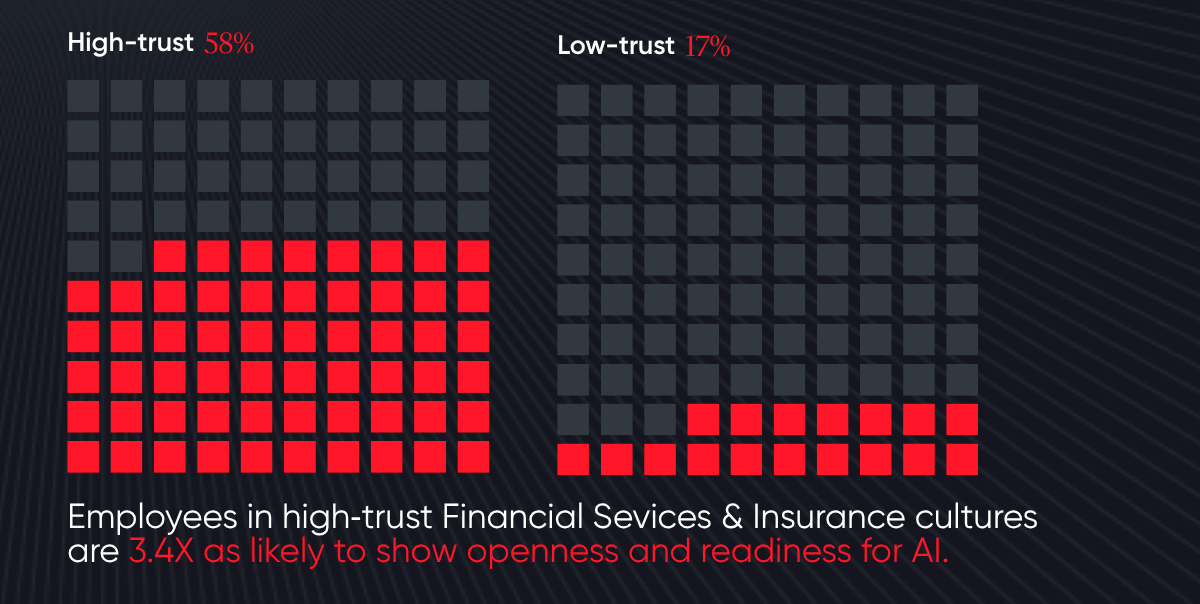
Conversely, a high-trust culture facilitates AI transformation by helping employees understand the "why" and feel supported through change: AI openness and readiness increases by 3.4X in high-trust financial services & insurance organisations.
Trust boosts customer satisfaction in consulting and professional services
In people-first workplaces, employees are clearer on priorities, quicker to resolve issues, and consistently deliver high-quality customer service. In a client-facing sector like consulting & professional services, that people strength becomes operational advantage.
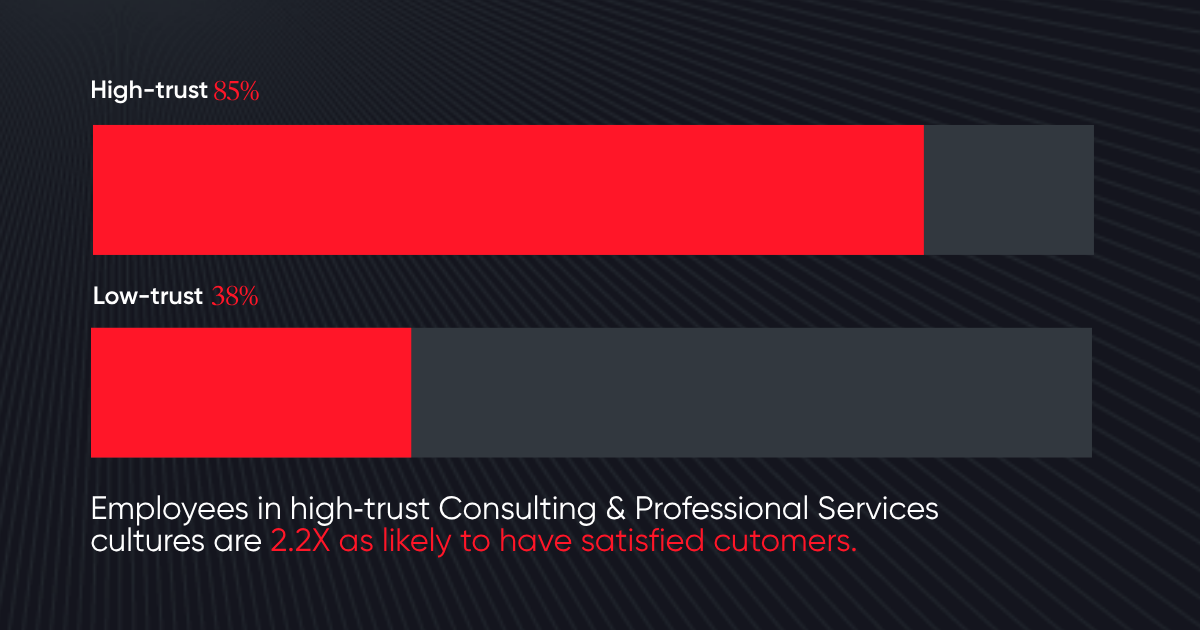
That's why high-trust workplaces in consulting and professional services are 2.2X more likely to have satisfied customers than their low-trust peers.
In education & training, psychological safety drives engagement and retention
In education & training, purpose remains a powerful driver, but workload pressures continue to take their toll. The Education Support’s Teacher Wellbeing Index found that wellbeing in the sector has dropped to the lowest level since recording began in 2019, with 77% of teachers experiencing symptoms of poor mental health due to work. The risk is burnout, attrition, and loss of engagement – all of which negatively impact performance.
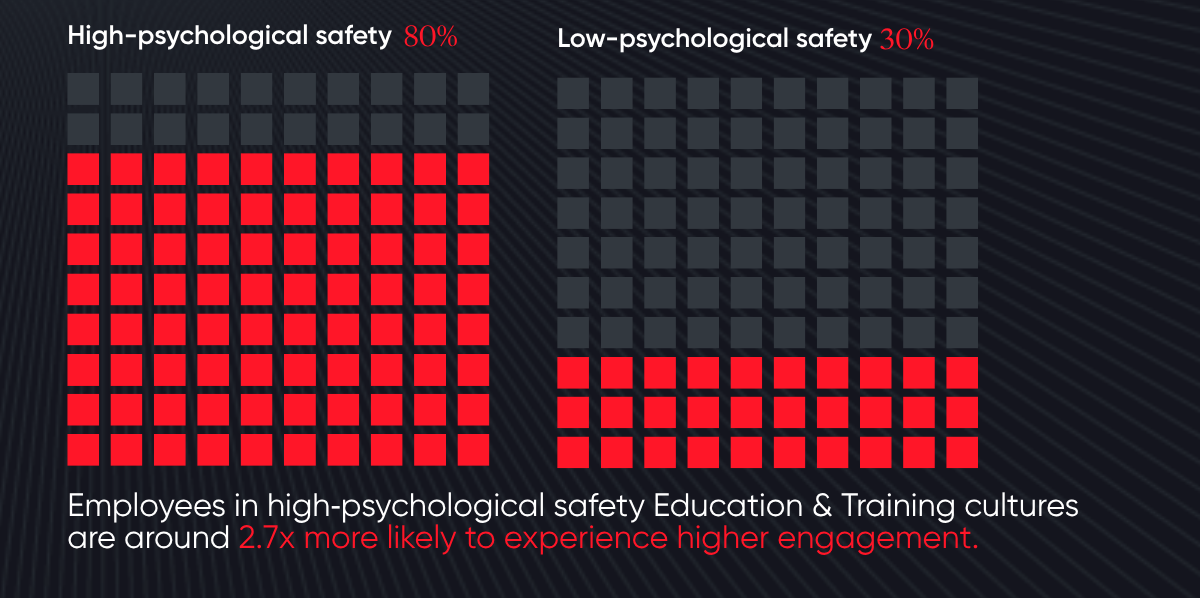
In high-trust education & training workplaces, however, psychological safety sits at 77%, vs 16% in low-trust companies. Naturally, performance follows: engagement rises by 2.7X and intent to stay by 3.3X.
Trust fuels retention in retail, hospitality & leisure
In the fast-paced world of retail, hospitality & leisure, holding on to employees means holding on to frontline knowledge, skills and capability that costs to replace. But the sector ranks among the highest for turnover, with hospitality and retail sitting at 41% and 33% respectively, according to the CIPD.
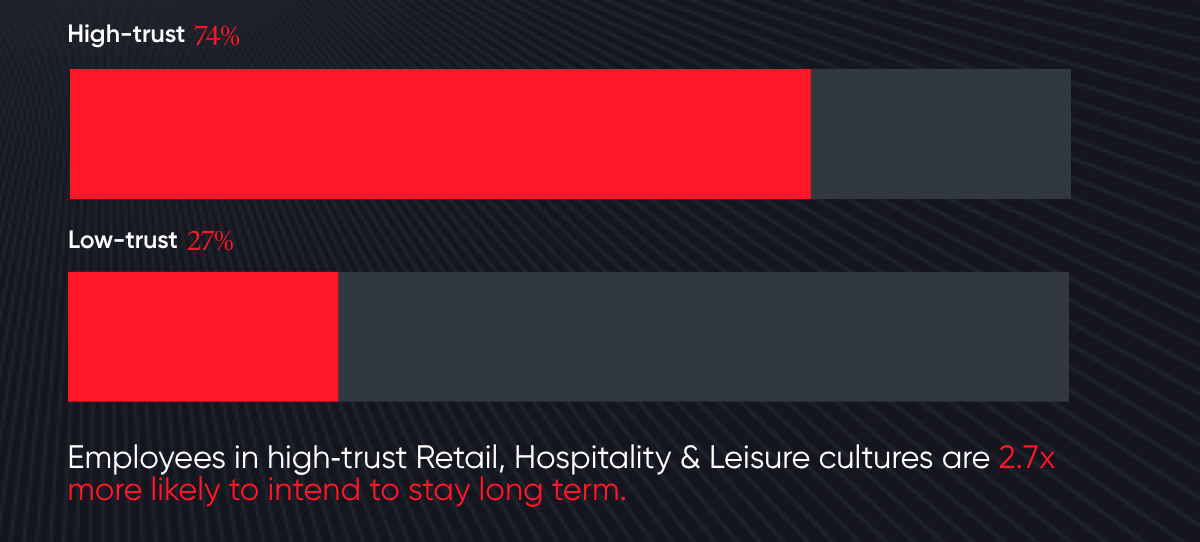
At high-trust workplaces on the other hand, employees feel supported and valued, and are 2.7X more likely to intend to stay with their employer "for a long time." This sentiment is reflected in real-world retention rates: Great Place To Work Certified™ retail and hospitality organisations (who outperform the typical UK workplace for trust) retain at least double the number of employees as the national average.
Hear from leaders shaping the future of work
If you’re looking to harness the connection between culture and business performance, you won't want to miss For All Summit London 2026.

In construction, engineering & property, trust boosts agility
Construction, engineering & property firms face a shortage of specialist skills at a time when projects are becoming increasingly complex and regulatory requirements continue to grow.
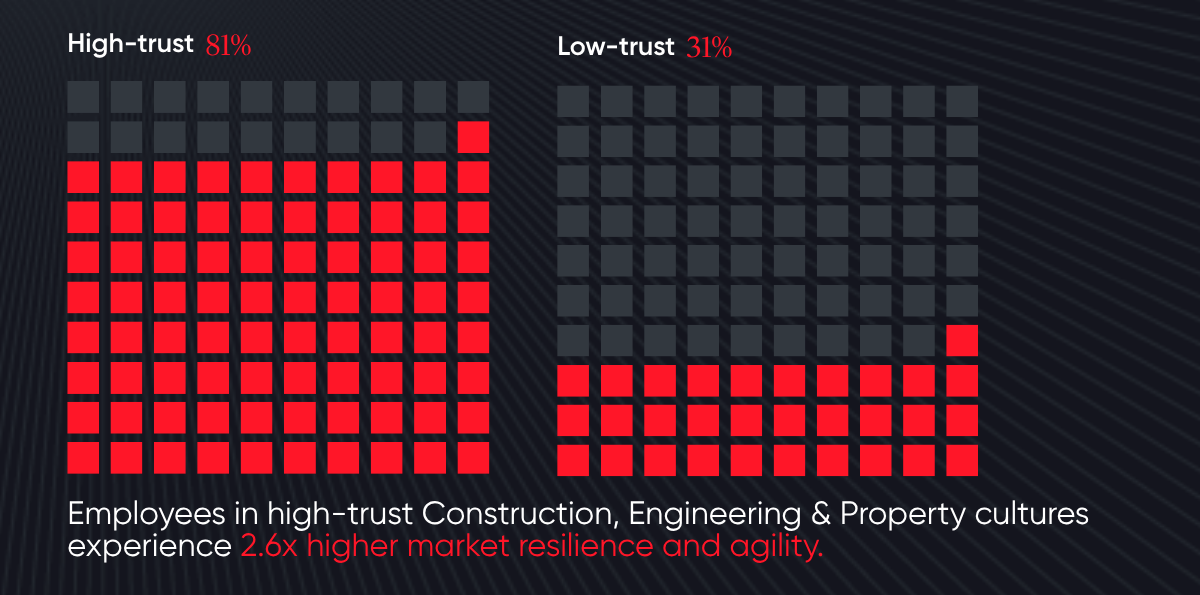
High-trust organisations in the sector experience 2.6X greater market resilience and agility.
Culture sustains impact in charity & not-for-profit
While often being motivated by a strong commitment to social impact, 78% of charity & not-for-profit employees say they feel emotionally exhausted or burnt out at work at least sometimes, according to a survey by CharityJob.
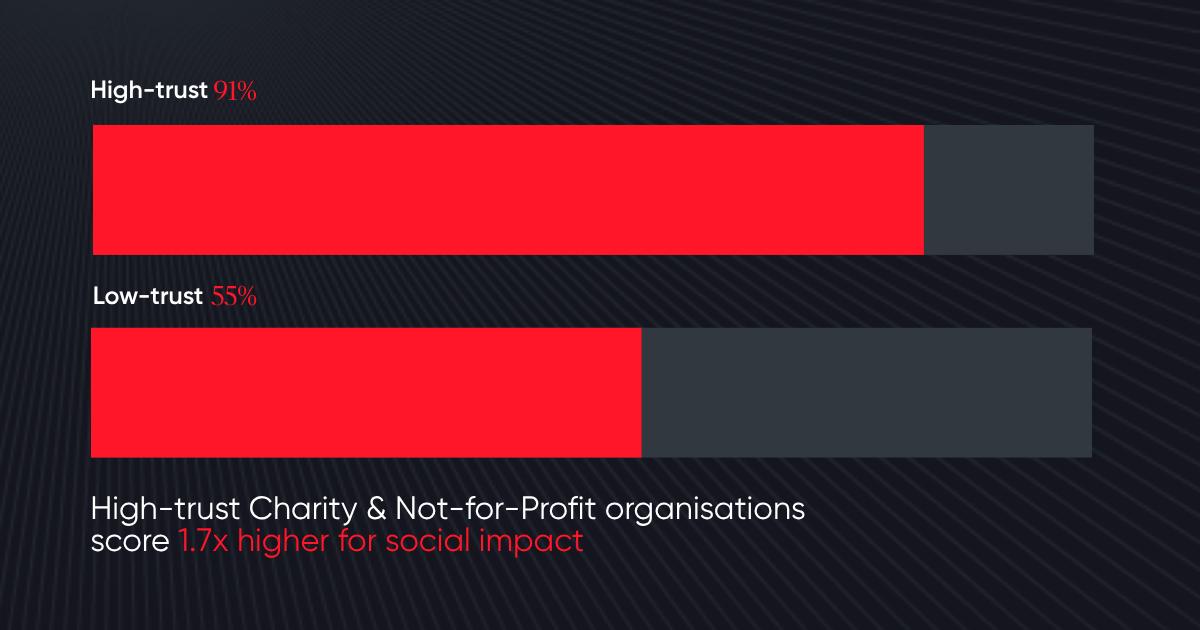
But in high-trust organisations in the sector, 78% of employees say their organisation is a psychologically and emotionally healthy place to work, compared to just 21% in their low-trust counterparts. Looking after employees means protecting purpose, too: when trust is high, social impact also increases by 36 percentage points.
.png?width=150&height=39&name=Learning%20%26%20Development%20Report%20(10).png "Learning & Development Report (10)")
The Great Place To Work Effect
Discover more about how trust fuels growth across sectors by shaping the culture that drives performance.
.png?width=1366&height=768&name=Learning%20%26%20Development%20Report%20(9).png "Great Place To Work Effect Report")
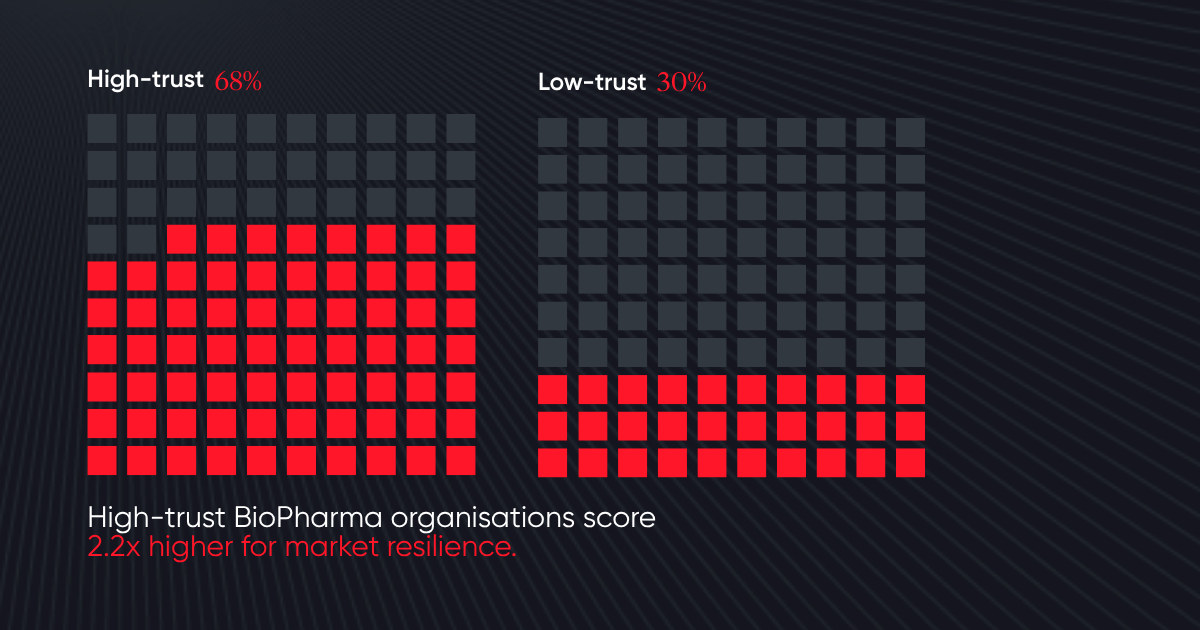
Trust drives resilience amid disruption in BioPharma
When it comes to workplace culture, moments of change can be make or break.
With BioPharma experiencing a serge in mergers and aquisitions, alongside dramatic tech transformation, the sector risks uncertainty, trust gaps, and cultural friction. But high-trust biopharma workplaces stay strong amid disruption, with over 2X higher market resilience than in low-trust peers.
In healthcare, trust protects people and purpose
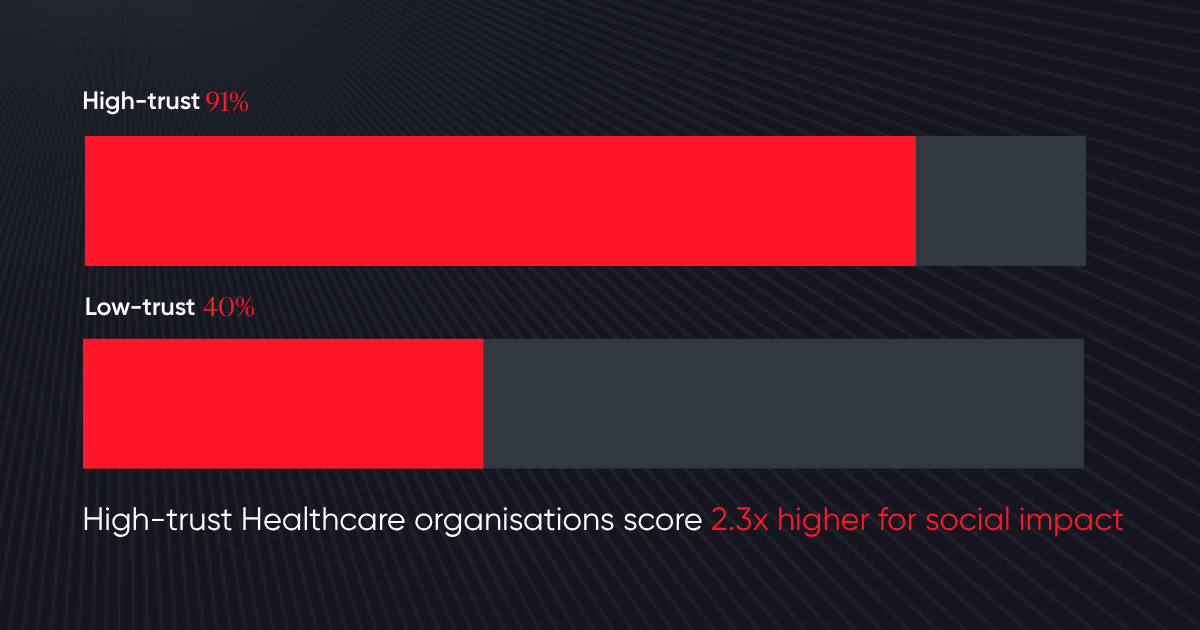
Healthcare employees enter the profession to improve patient outcomes and make a tangible difference to people’s lives. But rising patient demand, workforce shortages and capacity constraints are placing increasing pressure on employees, with 56% of the healthcare workforce experiencing excessive stress from their job demands at least sometimes.
High-trust organisations in the sector understand that supporting people is not separate from achieving the mission – it is fundamental to it. Not only do these workplaces score 53 percentage points higher for psychological health, they also outperform for social impact by 2.3X.

Where culture meets performance
At the For All Summit London 2026, you'll gain proven strategies from industry trailblazers, build a network of growth-minded leaders, and leave with actionable strategies for driving results in your organisation – collecting CPD credits along the way.
Trust builds future ready workforces in manufacturing, production & transportation
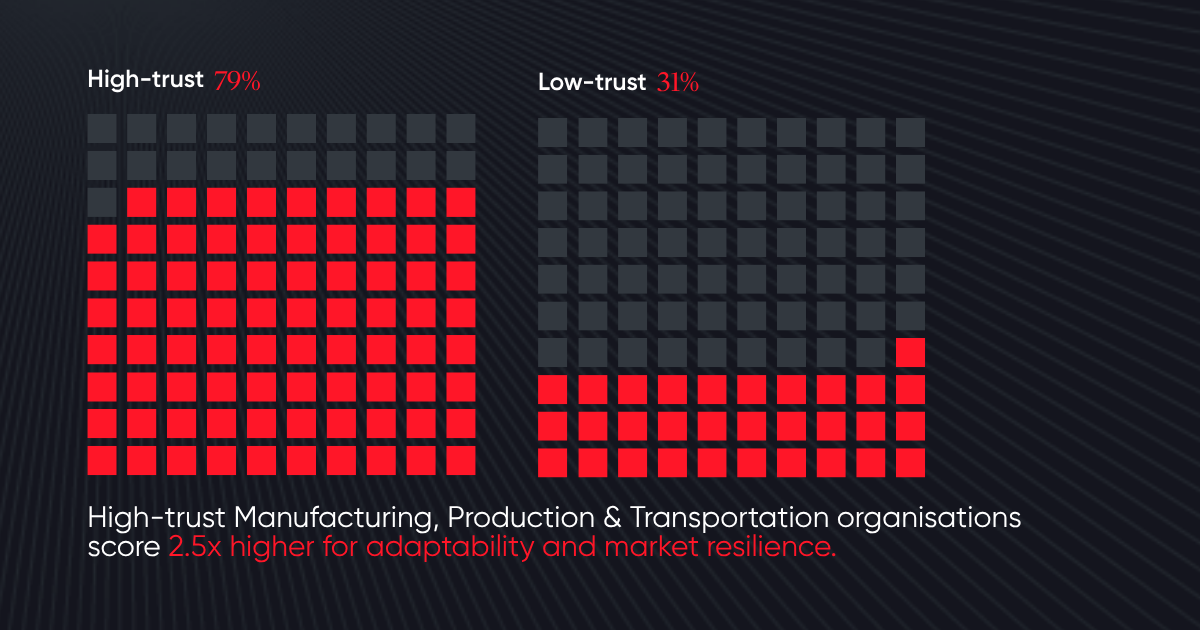
In manufacturing, production & transportation, organisations are grappling with the twin challenge of an ageing workforce and the loss of institutional knowledge. According to MAKE UK, more than half of UK manufacturers expect 6% to 20% of their workforce to retire by 2032, often taking decades of expertise with them.
The businesses that will succeed in this environment are the ones who focus on trust, becoming places where people feel confident developing new skills; share rather than hoard their knowledge. It's partly why high-trust workplaces in the sector score 2.5X higher for adaptability and market resilience.
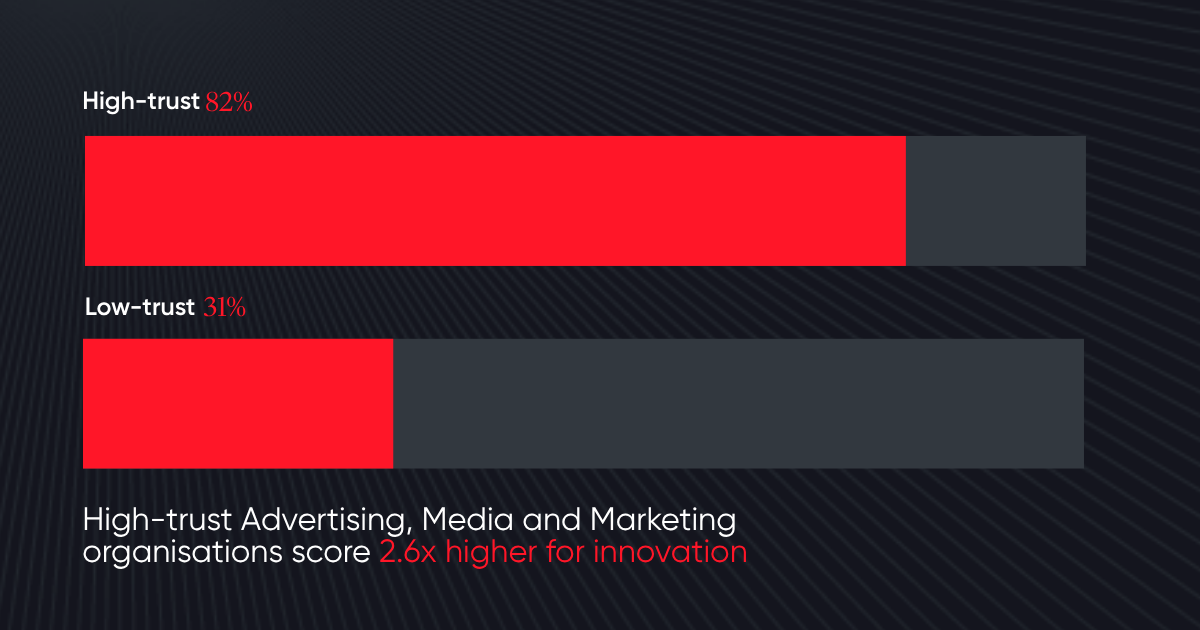
High-trust cultures boost creativity in advertising, media & marketing
In an industry reliant on creativity, the ability to freely innovate and experiment is vital.
A high-trust, psychologically-safe environment allows employees to do so without fear of failure or retribution, and thus drives the creativity that allows firms to stand out in a crowded marketplace. In fact, psychological safety boosts innovation in the sector by 35 percentage points, and trust by 51 percentage points.
Trust fuels adaptability in tech
The tech sector is facing dramatic disruption driven by continuing restructures, AI, and shifting business priorities.
In this environment, success depends not just on what is changing, but on how supported people feel as they adapt: leaders must focus as much on confidence and trust as on tools and processes.
In high‑trust tech environments, employees are twice as likely to adapt to change, and 1.5X more likely to feel confident about AI.
The Great Place To Work Effect
Discover more about the link between trust and business performance.
Sources:
| Great Place To Work, UK Workforce Study, 2026 |
| Education Support, Teacher Wellbeing Index, 2025 |
| CIPD, Benchmarking Employee Turnover, 2024 |
| Great Place To Work, Certified Companies Benchmarks, 2026 |
| CharityJob, Expectations and Values at Work: A Generational View, 2026 |
| MAKE UK, 2030 Skills: Closing the Gap, 2022 |