Skip to content
Great Place To Work Wellbeing at Work Report 2026
Executive Summary

When organisations take care of their people, better experiences drive better business outcomes.

Aviva and Gü Indulgent Foods Ltd may be two big brands operating in disparate sectors, but they share a strong culture link: at both of these UK Best Workplaces for Wellbeing™, leaders recognise that employee wellbeing is not ‘fluffy’. Rather, the day-to-day employee experience, driven from the top and translated into subsequent workplace culture, is what drives long-term sustainable performance.
 
In a time when organisations are increasingly required to do more with less amid constrained budgets, rising expectations and ongoing uncertainty, the differentiator is how effectively employers enable their people to perform under pressure. Great Place To Work research proves that, within this difficult context, successful organisations are the ones who support their employees to face challenges and disruption together. Investing in wellbeing makes employees more resilient, productive and able to perform, and it drives retention through a greater sense of belonging.
 
Workers in psychologically healthy environments, for example, are six times more likely to stay and five times more likely to strongly advocate for their organisation — two outcomes directly tied to retention, employer brand and long-term performance.1
 
This is the Great Place To Work Effect in action. High-trust, high-wellbeing cultures do not just feel better, they perform better. Employees in these environments experience:
  • 5.8x higher levels of wellbeing
  • 3.2x greater sense of belonging
  • 5.3x more innovation
  • and 3.6x more collaboration
Wellbeing, in this context, acts as a performance multiplier, as employees who feel supported and psychologically safe are more resilient, more engaged, and better able to navigate change. This is particularly critical today, as more than 20% of employees report experiencing burnout, while organisations simultaneously seek greater agility and innovation. In high-trust environments, 80% of employees adapt quickly to change, compared to just 60% in typical workplaces, demonstrating how wellbeing underpins organisational responsiveness.1
 
Crucially, these outcomes are not driven by isolated initiatives. They emerge from cultures where wellbeing is embedded into the fundamentals of work: psychological safety, fair leadership, meaningful work, strong relationships. Where these conditions exist, employees develop stronger loyalty intent; staying not because they have to, but because they want to. Thus, organisations that invest in employee wellbeing don’t just create better workplaces, they build more adaptive, innovative and high-performing businesses.
Sara Author

Wellbeing delivers measurable performance outcomes

Great Place To Work research reveals how employee wellbeing drives business success by boosting performance outcomes like retention, agility and productivity.

2X higher productivity

Employees in high-wellbeing* environments are 2X more likely to say people at their organisation "look for faster and smarter ways to deliver high-quality work."

2X higher agility

Employees in high-wellbeing environments are 2X more likely to agree that people at their workplace "quickly adapt to the changes needed for the organisation’s success."

2X higher intention to stay

Employees in high-wellbeing environments are 2X more likely to say they want to work at their organisation "for a long time."

*high-wellbeing = workplaces who excel against Great Place To Work's Wellbeing Index; which includes a set of statements from the core Trust Index™ survey that assess holistic experiences of wellbeing at work.

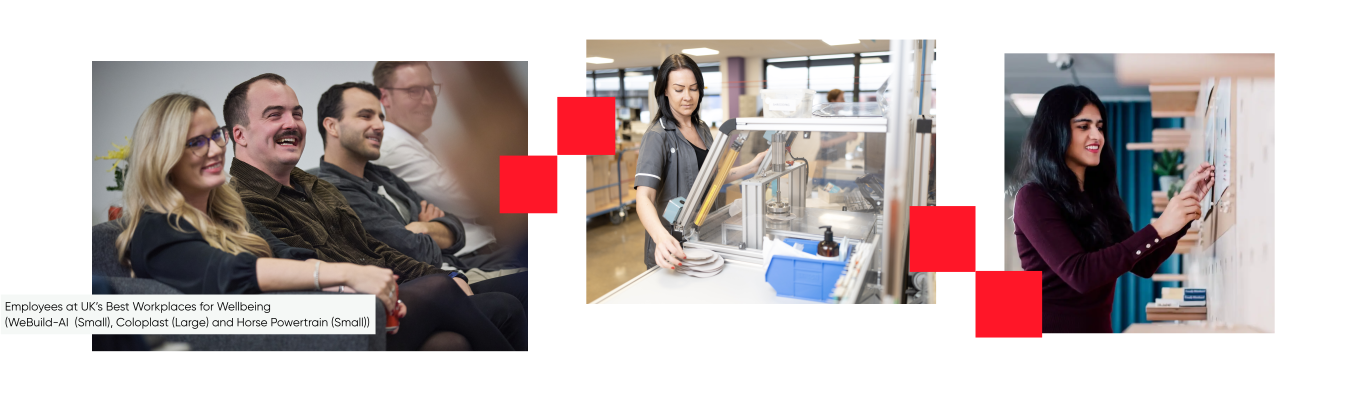
Wellbeing Report Employee Photo Banner 2

The leading UK sectors for wellbeing in the workplace

We collected data from employees across key UK sectors and evaluated them using our Extended Wellbeing Index. This Index measures holistic workplace wellbeing across areas such as Interpersonal Relationships, Job Design & Fulfilment, Work-Life Balance, Psychological Safety, Mental, Physical & Financial Health, and General Evaluation of Wellbeing. Each sector received a Extended Wellbeing Index score and was ranked from highest to lowest based on their overall wellbeing experiences.

Wellbeing is under strain in UK workplaces

In the UK, businesses are up against a challenging reality. Poor mental health is costing the UK economy £150 billion annually, largely driven by absenteeism, presenteeism and economic inactivity. For the last decade, mental ill health has been the single biggest cause of long-term workplace absence.2

Underestimating the impact of wellbeing does not simply risk unhappy employees, but a loss of productivity, adaptability and retention – because people do not have the emotional and cognitive capacity to perform at their best.

These figures may seem overwhelmingly out of an employer’s control; where they do have significant power to shape outcomes, however, is in their leadership and management behaviours. Nearly 70% of UK employees claim that their manager has as much impact on their mental health as their partner3, highlighting the sheer importance of people management in shaping wellbeing outcomes and organisational performance.
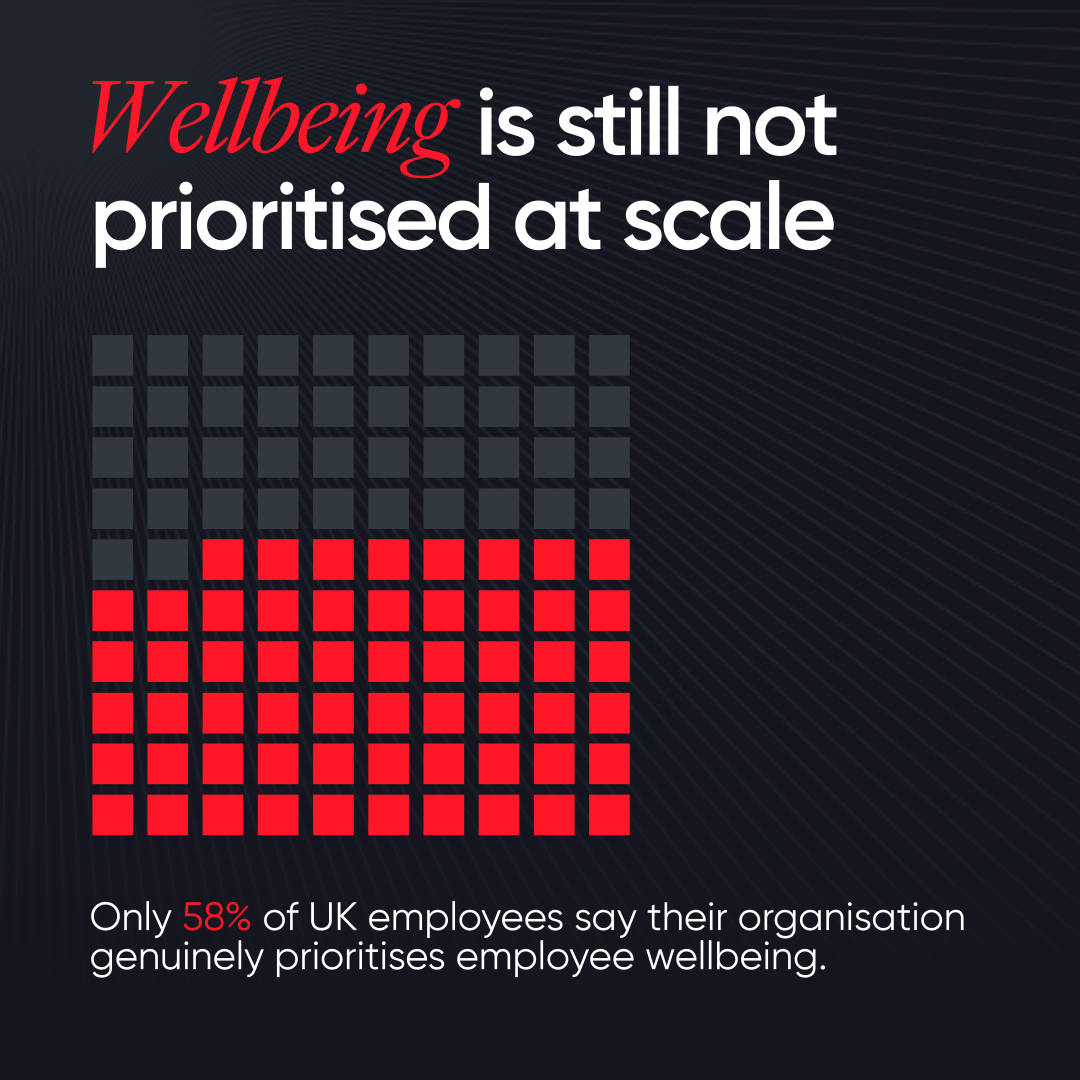
Wellbeing is still not prioritised at scale 1

Trust enables wellbeing

Trust is the critical foundation upon which wellbeing depends.

In high-trust workplaces, employees feel seen, supported and safe to speak up. They are more likely to ask for help, manage pressure effectively, and sustain performance over time. Where trust is low, wellbeing becomes inconsistent and overly reliant on surface-level initiatives.

This is the Great Place To Work Effect in action: wellbeing is a culture outcome of high-trust leadership. When it is present, it underpins employees' capacity to perform effectively, creates the conditions for productivity, resilience and agility, and ultimately fuels performance.
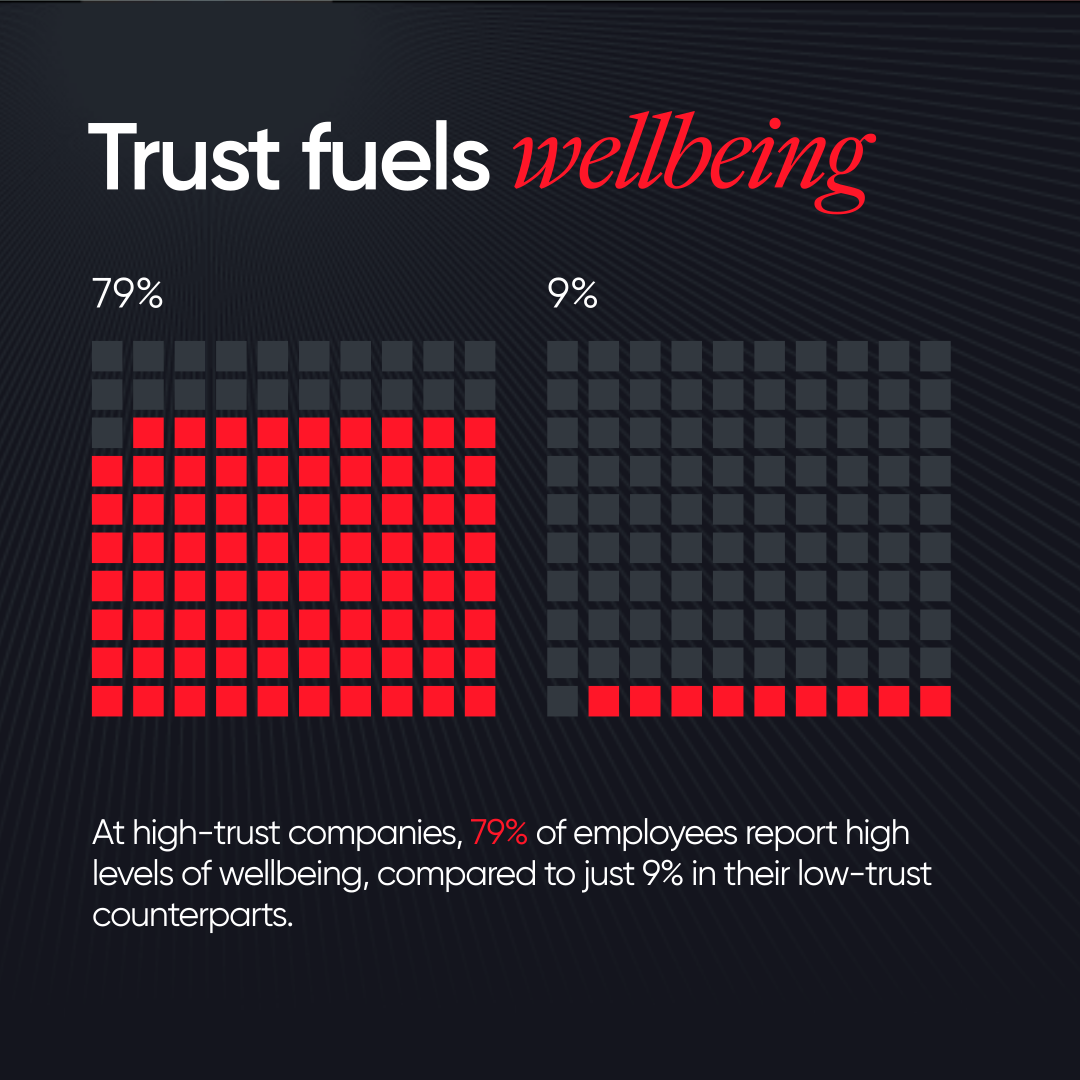
Trust fuels wellbeing 2
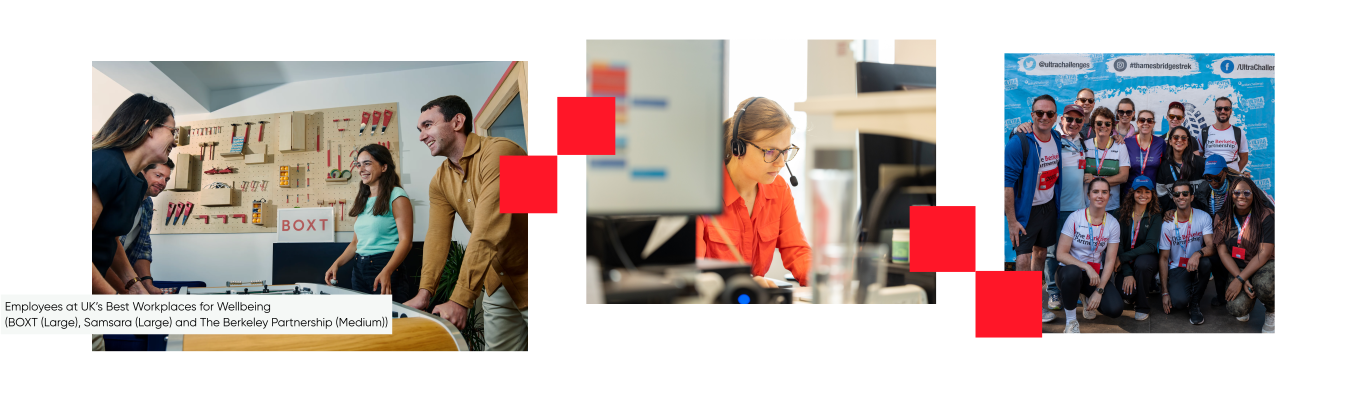
Wellbeing Report Employee Photo Banner 1
EXUS Logo

"Each employee gets the chance to have 1-1 with the CEO himself twice a year. He is a great person, showing real concern for how we’re doing. Top management lead by example. Their paradigm sets the tone for the entire company. "

Employee at EXUS, No. 7 UK's Best Workplace for Wellbeing (Medium)

Leadership determines whether people cope or thrive

As our research in collaboration with Johns Hopkins University shows, employee wellbeing has declined from its pandemic peak, with the sharpest drops among under‑35s and frontline managers. This signals a growing gap between the demands of work and the support people experience day to day.

In high-performing organisations, wellbeing is not driven by programmes or policies alone. It is shaped by how leaders show up every day – in how they listen, respond, and make decisions.

Caring leadership sits at the centre of this. It is one of the nine core trust-building behaviours identified in the Great Place To Work Effect, shaping whether employees feel supported, respected, and able to do their best work.

When leaders take time to understand people’s experiences – both inside and outside of work – they create the conditions for psychological safety and reduce the strain that undermines performance. This is where many organisations fall short. Wellbeing initiatives are added on, but everyday leadership behaviours remain unchanged. The result is inconsistency: support exists in theory, but not always in experience.

Where leaders lead with care, the difference is tangible: employees are more likely to feel valued, treated fairly, and listened to. Trust strengthens – and with it, the foundations of wellbeing, fuelling human capacity and organisational performance.
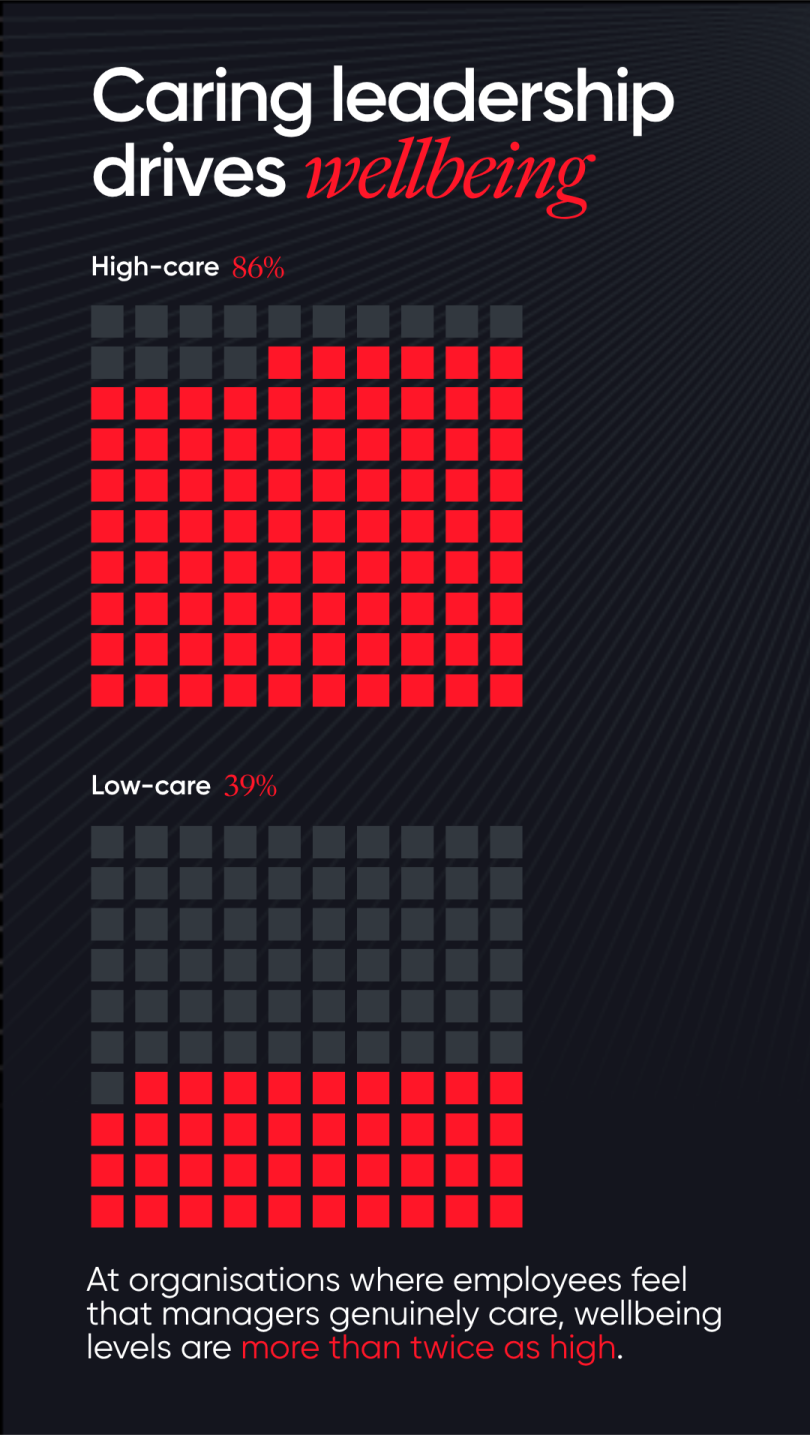

Caring leadership drives wellbeing

“Management are so understanding about how each and every one of the team are doing – not only in work but at home. Managers treat me like a human, not a number, which is refreshing. This simple mindset makes it a joy to come to work and give my best self. ”

Employee at Acorn Group, No. 46 UK's Best Workplace for Wellbeing (Super Large)

Acorn-Group-Logo

Belonging sustains performance

Belonging is an accumulation of day-to-day experiences that enables a person to feel safe to bring their full, unique self to work.

A sense of belonging is a core dimension of employee wellbeing: without feeling like they truly belong, employees' wellbeing levels suffer, and without high levels of wellbeing, they are unlikely to feel as though they belong. Many of the same high-trust leadership behaviours that shape wellbeing – things like listening, fairness and genuine care – also drive belonging.

Yet fewer than two-thirds of UK employees feel a strong sense of belonging, exposing a critical gap in many wellbeing strategies.

If employees don’t feel they belong, they are more likely to feel insecure about their place in the organisation and feel less freedom to be their authentic selves. And that insecurity, that fear, undermines their performance, their creativity and their ability and willingness to collaborate.
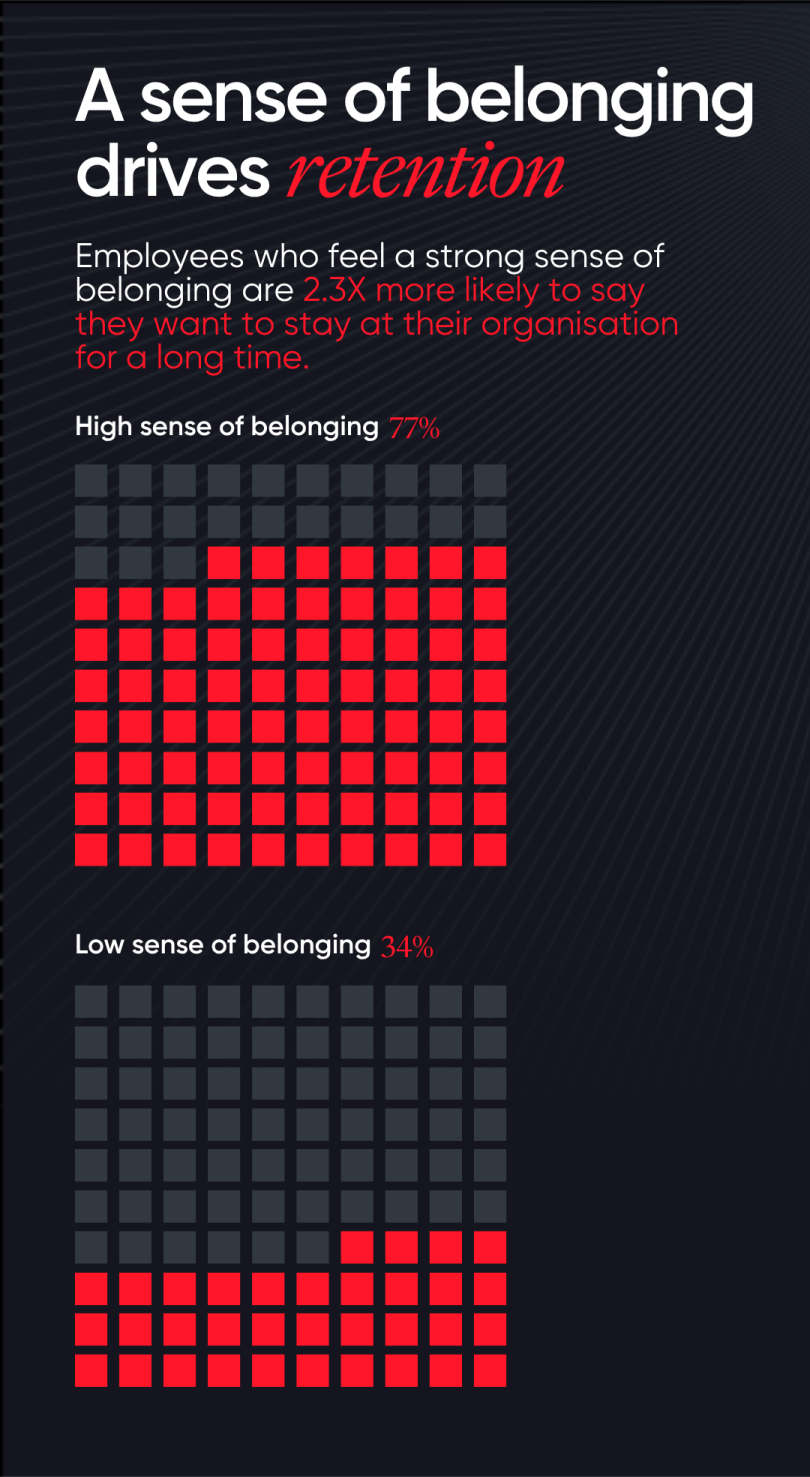
On the other hand, when employees feel valued, included, and connected, they don’t just have the energy and readiness to perform – they also choose to stay and invest that energy in the organisation.
 
This is a critical driver of performance, because when employees stay long-term, organisations retain the capability that they’ve built: the skills, the relationships, the institutional knowledge. That means more consistency, less disruption, and lower recruitment costs. Belonging is the lever that not only improves performance, but determines whether it lasts.
A sense of belonging drives retention

The bottom line

Organisations on the UK’s Best Workplaces Lists, where trust and wellbeing are embedded into everyday leadership, outperform the market by more than four times4 and achieve 6.25x greater revenue per employee5

This is not coincidence: a high-trust, high-wellbeing environment fundamentally shapes how effectively work gets done – and whether people choose to stay. When employees feel energised, supported and psychologically safe, they have greater cognitive capacity, focus and resilience, enabling better decision-making, problem-solving and attention to quality, while also strengthening commitment and long-term retention. For leaders looking to enhance competitiveness and fuel growth, wellbeing cannot be ignored.

Download your copy of The Great Place To Work Effect to discover how leaders can build trust, shape culture and drive performance. 

Employees with life admin support are 3x more likely to report good work–life balance. (17)


High‑trust workplaces are more agile and better at adapting to change.

Why? Because development:

Builds transferable skills Enables internal mobility Encourages learning in response to change rather than resistance Employees who are used to learning and stretching can move with the work instead of clinging to static roles.

Employees with better access to development opportunities are over twice as likely to report market resilience and agility.
Employees with life admin support are 3x more likely to report good work–life balance. (17)


GPTW research shows that employees in high‑trust cultures are far more likely to:

•Go above and beyond •Experiment and improve processes •Contribute ideas rather than hold them back

Development reinforces this by:

•Increasing confidence •Signalling permission to learn by doing •Normalising experimentation and skill‑building

Employees in high‑development environments are 2.5x more likely to innovate, and when it comes to increased access to development opportunities are 2x more likely to be willing to give extra effort.


2X higher agility

High‑trust workplaces are more agile and better at adapting to change.

Why? Because development:

Builds transferable skills Enables internal mobility Encourages learning in response to change rather than resistance Employees who are used to learning and stretching can move with the work instead of clinging to static roles.

Employees with better access to development opportunities are over twice as likely to report market resilience and agility.

Great Place To Work Effect: Leadership Behaviour - Listening

2X higher innovation

GPTW research shows that employees in high‑trust cultures are far more likely to:

Go above and beyond Experiment and improve processes Contribute ideas rather than hold them back

Development reinforces this by:

Increasing confidence Signalling permission to learn by doing Normalising experimentation and skill‑building

Employees in high‑development environments are 2.5x more likely to innovate, and when it comes to increased access to development opportunities are 2x more likely to be willing to give extra effort.

Great Place To Work Effect: Leadership Behaviour - Listening
placeholder_200x200

2X higher agility

High‑trust workplaces are more agile and better at adapting to change.

Why? Because development:

Builds transferable skills Enables internal mobility Encourages learning in response to change rather than resistance Employees who are used to learning and stretching can move with the work instead of clinging to static roles.

Employees with better access to development opportunities are over twice as likely to report market resilience and agility.

2.5X higher innovation

GPTW research shows that employees in high‑trust cultures are far more likely to:

Go above and beyond Experiment and improve processes Contribute ideas rather than hold them back

Development reinforces this by:

Increasing confidence Signalling permission to learn by doing Normalising experimentation and skill‑building

Employees in high‑development environments are 2.5x more likely to innovate, and when it comes to increased access to development opportunities are 2x more likely to be willing to give extra effort.


2X higher agility

High‑trust workplaces are more agile and better at adapting to change.

Why? Because development:

Builds transferable skills Enables internal mobility Encourages learning in response to change rather than resistance Employees who are used to learning and stretching can move with the work instead of clinging to static roles.

Employees with better access to development opportunities are over twice as likely to report market resilience and agility.

2.5X higher innovation

GPTW research shows that employees in high‑trust cultures are far more likely to:

Go above and beyond Experiment and improve processes Contribute ideas rather than hold them back

Development reinforces this by:

Increasing confidence Signalling permission to learn by doing Normalising experimentation and skill‑building

Employees in high‑development environments are 2.5x more likely to innovate, and when it comes to increased access to development opportunities are 2x more likely to be willing to give extra effort.

 
Learning & Development Report (10)

The Great Place To Work Effect

How trust fuels growth by shaping the culture that drives performance.
Learning & Development Report (9)